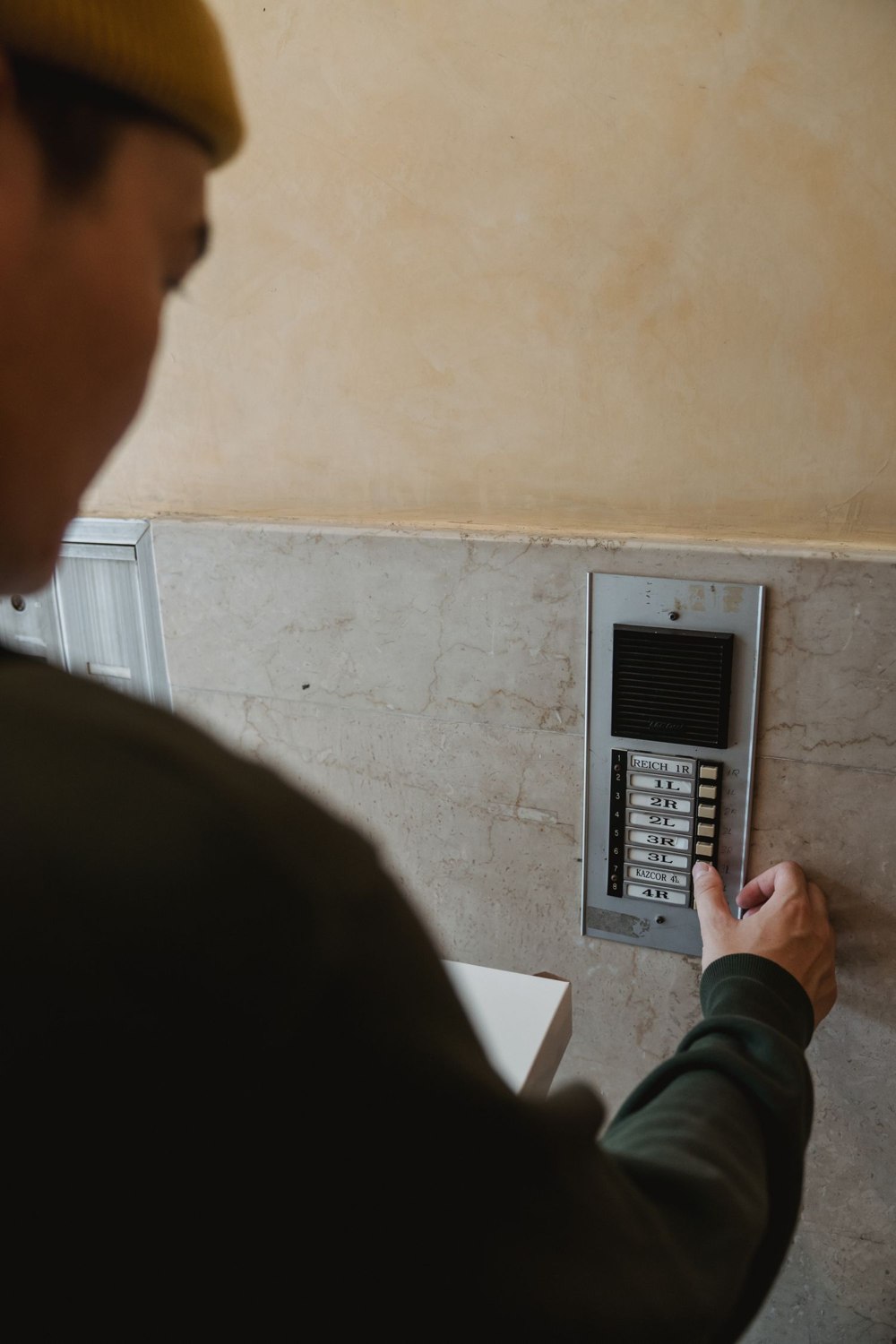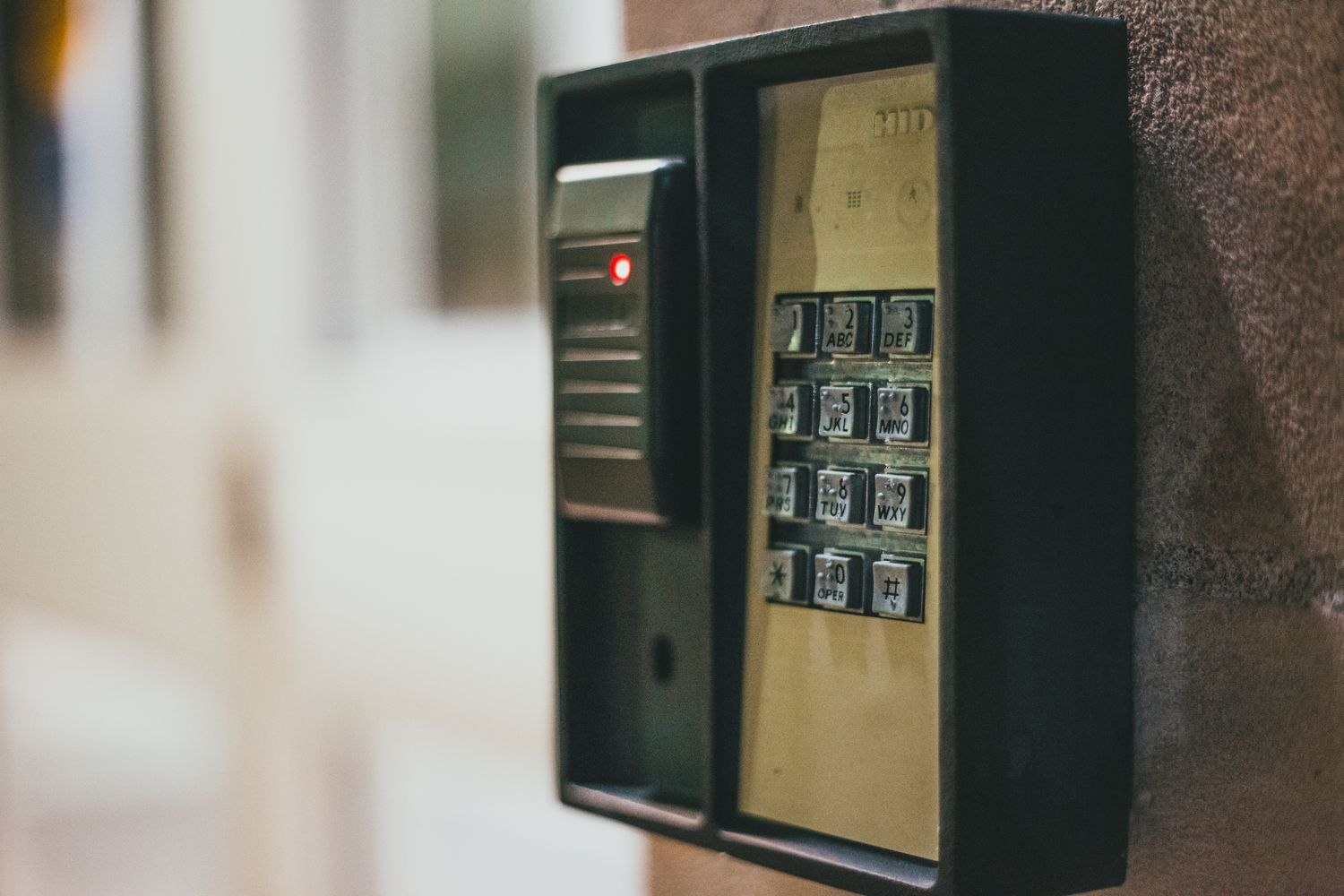
An intercom can sound clear during a quiet indoor demonstration and be difficult to use beside a busy street. The visitor's distance from the microphone, wind, passing traffic and echoes under a canopy can all affect the exchange. Plan around the entrance rather than the sample audio on a product page.
Choose a mounting position within the manufacturer's requirements that is obvious to a visitor. The person should not have to bend close to an unfamiliar opening or stand in the path of a moving door. Check whether a sign or a simple label is needed to distinguish the call control from a release button or nearby bell.
Try a normal short conversation using the supported test arrangement. Ask one person to approach, press the call control and say why they are visiting. The person answering should use the device or phone they will normally have, not a specially prepared setup beside the router.
Listen in both directions. A clear visitor voice does not guarantee that the reply can be heard outside. Check for feedback, clipped speech and delays that make people talk over one another. Adjust only the settings the manufacturer provides; increasing volume is not always the answer to a badly chosen microphone or speaker position.
For a phone-based system, examine the full call path. Does the call reach the intended user when the phone is locked? What happens if the first person does not answer? Read the service's connectivity requirements and avoid assuming that an app notification is equivalent to an ordinary phone call.
Give visitors enough time to understand the response. An instruction such as “use the side entrance” should identify a clear place, not rely on the resident's private name for a doorway. If several entrances share one account, make sure the answering person can tell which one is calling.
An intercom conversation helps with a decision; it does not automatically establish identity. Follow the household's agreed access procedure and avoid releasing a door solely because someone sounds hurried or familiar. Keep the equipment accessible for cleaning and maintenance so that a blocked microphone opening or damaged cover does not quietly undermine the conversation later.