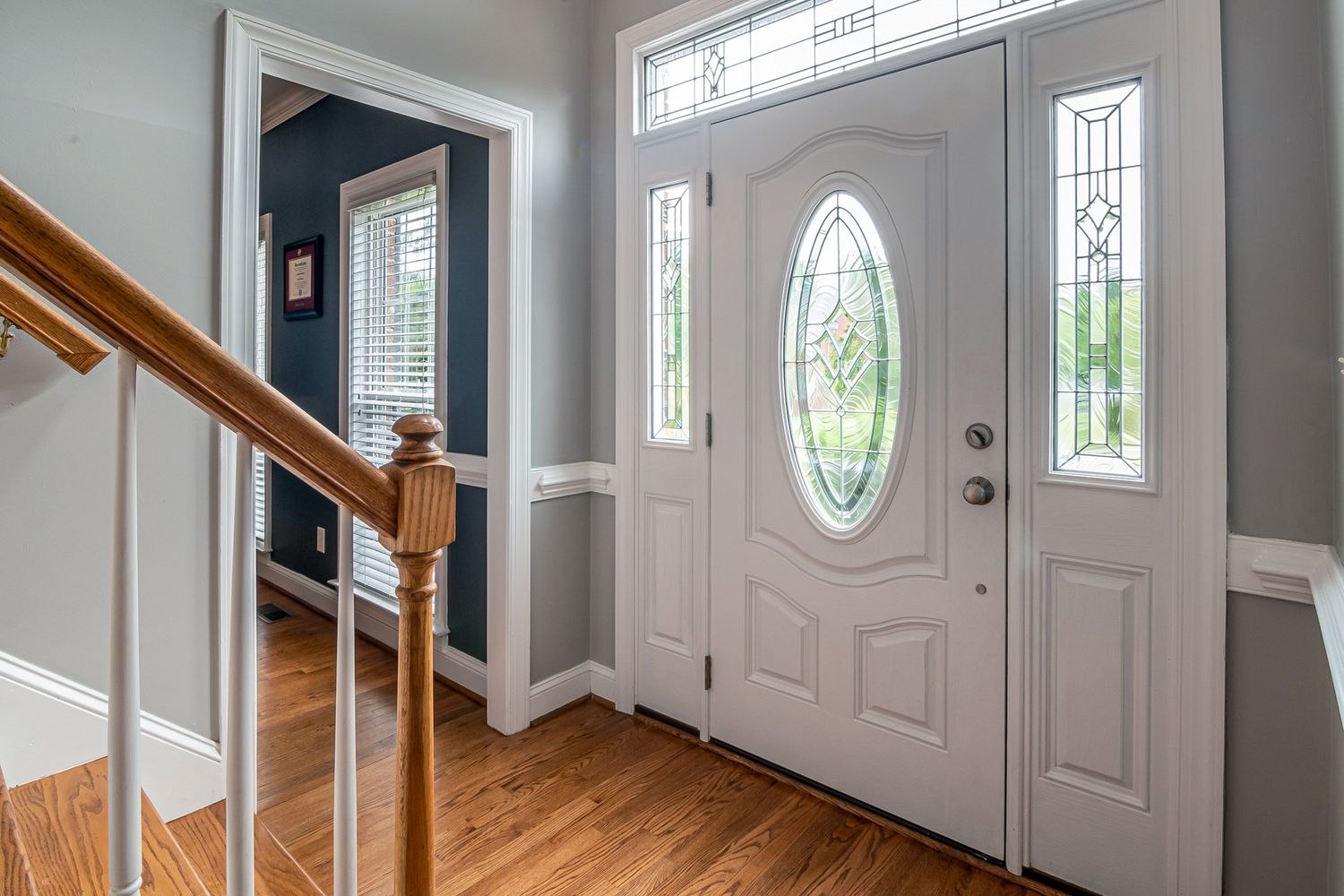
A molded door frame can leave the magnet much higher than the body of a contact sensor. Both pieces may look close when viewed from the hallway, yet their working surfaces are offset. The useful question is not simply whether they fit on the woodwork. It is whether the manufacturer permits that spacing and alignment throughout normal use of the door.
Start with the sensor's installation diagram. Identify the reference marks, permitted orientation and maximum separation for that exact model. Similar-looking devices can have different tolerances. A measurement copied from another generation may produce an installation that works intermittently rather than one that fails obviously at the start.
Look for a flat, stable area that does not interfere with the latch, hinges, seals or opening movement. Hold the two parts in the proposed positions while another adult opens and closes the door slowly. Nothing should strike the frame or rub against the sensor. Check the device status using the manufacturer's setup procedure before committing to an adhesive position.
Solve the offset without improvising the mounting
Some manufacturers offer a spacer or approved alternate magnet arrangement. Use the accessory specified for the sensor if it addresses the frame geometry. A stack of soft tape may appear to solve the height difference but can move as the door vibrates or the adhesive warms. Do not assume a loose magnet from another product will behave the same way.
If the available position is too narrow or irregular, photograph the frame and ask the supplier about suitable mounting options. Include a ruler in the photograph, but keep property-identifying details out of it. A different contact-sensor design may be a better choice than forcing this one into a poor location.
Check the result with the door fully closed, gently pulled against its latch, and opened normally. A door that shifts within its frame may bring the parts inside and outside the detection limit. That mechanical movement deserves attention rather than an increasingly precarious sensor adjustment.
On a heavily molded frame, compare two candidate positions before choosing. One might be visually discreet but leave only a thin strip of adhesive touching the surface. Another might be more visible but provide a flat mounting area and clear battery-cover access. If both satisfy the product's geometry, the serviceable position is usually the easier one to live with. A sensor that must be pulled off its mounting for every battery change invites repeated alignment work.
Check the reverse side of the opening too. A storm door, screen or handle may move through the space occupied by the sensor when the main door is fully open. This is why inspecting only the closed doorway can miss the most obvious physical conflict.
Name the device clearly and watch its status during ordinary use over the next few days. A closed reading only describes the relationship between the sensor and magnet; it does not confirm that the door is locked. Keep the physical locking check in the household routine even when the app looks reassuring.