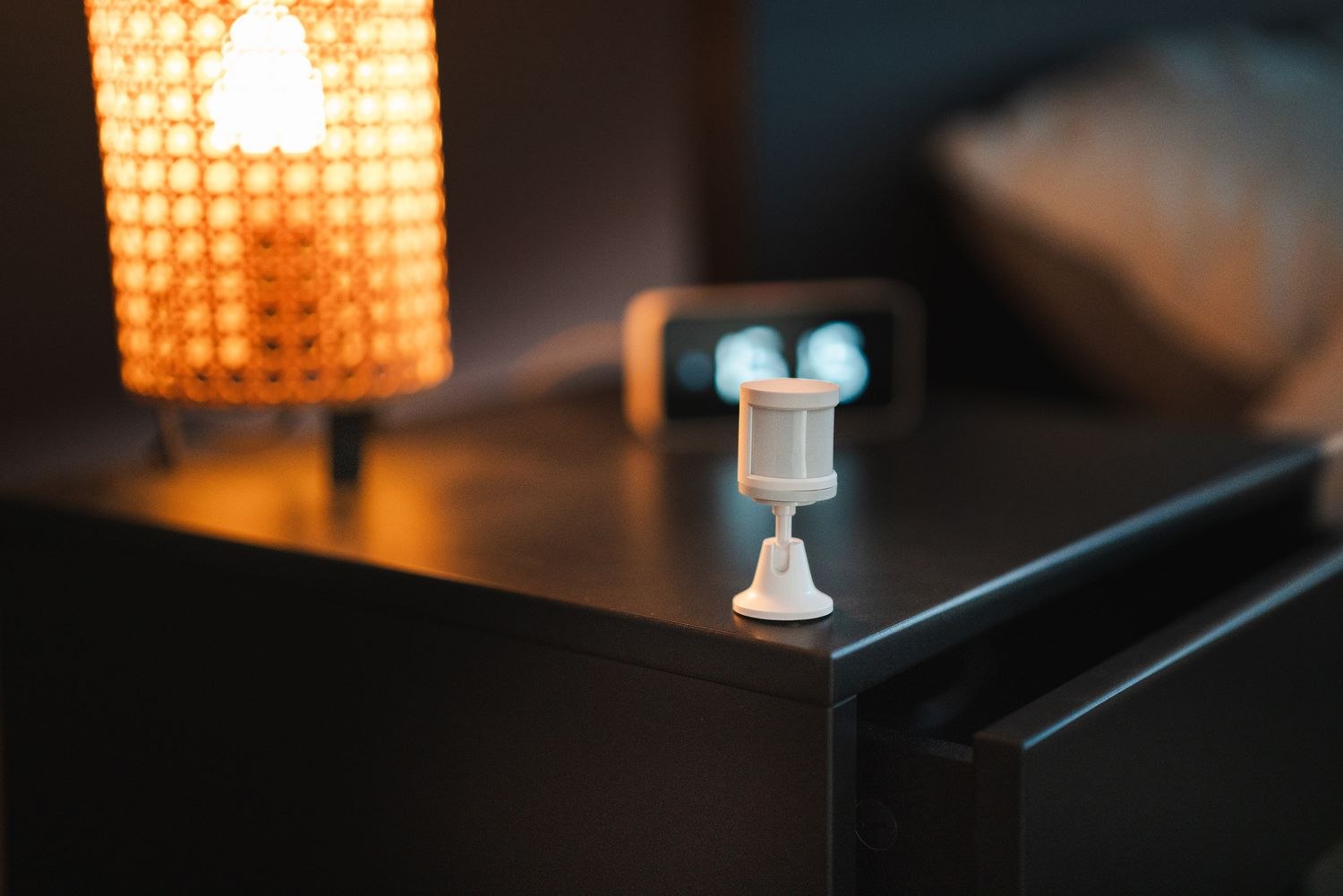
A living room changes character through the day. Sunlight moves across the floor, a heating vent starts up, curtains shift and people settle into different seats. A motion detector placed only with the empty room in mind may behave differently once the room is being used. Begin by observing the space before choosing a mounting point.
Identify the paths the detector is intended to observe. A hallway entrance and a large open-plan room are different tasks. Draw the relevant route and mark tall furniture, columns and shelving that could interrupt the detector's view. A coverage diagram in the product manual is more useful than guessing from the shape of the plastic housing.
For a passive infrared detector, the manufacturer may specify mounting height, orientation and suitable angles across a path. Follow those details for the exact model. Ring, for example, warns against direct sunlight and nearby heat sources in its placement guidance. That supports looking at the whole room, not simply maximizing the distance visible from a corner.
Account for the room you will actually have
Check where a radiator, portable heater or air outlet sits relative to the proposed position. Include objects that move without a person walking through the room. A loose curtain above an air vent or a seasonal decoration can become relevant after installation, even if the initial test was uneventful.
Do not tuck the detector behind a plant to make it less noticeable. A leaf that seems harmless now may grow into the field of view. Likewise, mounting high above a cabinet without reading the guide can change the detector's intended coverage. Appearance is a reasonable consideration, but the approved viewing arrangement comes first.
Use the manufacturer's walk-test method before deciding that the room is covered. Follow the ordinary route rather than waving directly in front of the sensor. Test under the monitoring provider's approved conditions and return the alarm to its intended state afterward. Keep the result in the device notes, especially if a particular placement constraint influenced your choice.
In an L-shaped room, a detector that appears to overlook the main seating area may not observe the short leg behind a partition. Mark that limitation on the sketch instead of mentally completing the view. If the intended route passes through that hidden area, decide whether another approved position can observe it or whether additional coverage is justified. Buying a second device should answer a particular gap rather than simply make the equipment list feel more complete.
When the room is rearranged, look at the detector again. A new tall bookcase can matter more than a changed sensitivity setting. If there is no suitable position that observes the intended route without repeated nuisance events, ask about a different detector or coverage arrangement rather than continually reducing sensitivity until the problem disappears from the app.